
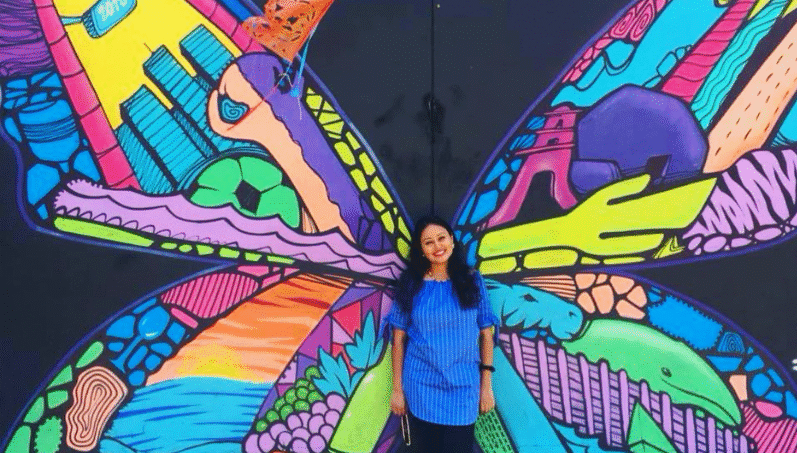
My Begum Rokeya Reading Journey: Personal Reflections on a Bengali Muslim Feminist Foremother
First Impressions of Begum Rokeya’s Work
My name is Aanika, and I’m officially a Rokeya-holic. Is there even a word for those of us who are obsessed with, and feel like bowing down to, the brilliance of this incredible woman?
It was March 2023 when I picked up an English translation of Rokeya Hossain’s writing for the very first time. I had no idea my life was about to change forever. Since that day, I’ve struggled to find the right words to express just how much awe I feel for Rokeya. She speaks my heart in every possible way. Only those who have read her work can truly understand the meaning of greatness. And yes, I realize I sound like a haughty-taughty snob for saying that, haha.
The prevailing voice echoing in my mind while reading her words has been:
OMG!!! THIS WOMAN!!! THIS WOMAN….SHE IS SO…..OMMGGG!!!
What an extraordinary human being. Wow. What a legend.
Why didn’t I discover her writing earlier in my life? What a fiery, passionate, and resilient visionary.
She really is the foremother of all things related to Bengali Muslim women’s education and rights!
She deserves to be celebrated and recognized for her indisputable greatness. I still can’t believe it took me this long to read her work which I’m in absolutely awe of.
Just wow….this child-free woman with no formal education who was still so far ahead of her time.
Ever since then, I’ve felt an overwhelming urge to honor her. The conflict? Should I compose a sonnet, curate a museum exhibition, build an ofrenda, or something else. More than anything, my goal is to amplify Rokeya’s extraordinary legacy by making accurate information about her life and writings freely available in a user-friendly digital format, so her words can reach a wider audience. So I started a resource hub to get going.
👉🏽 Visit my complete Rokeya Resource Hub for more information.
English Translations of Rokeya’s Works I’ve Read
- Sultana’s Dream and Padmarag by Barnita Bagchi (2015 & 2022, Penguin Classics)
- Sultana’s Dream: And Selections from the Secluded Ones by Roushan Jahan (1988, Feminist Press at CUNY)
- The Essential Rokeya by Mohammad A. Quayum (2013, Brill)
-
Freedom Fables: Satires and Political Writings by Kalyani Dutta (2019, Zubaan)
These books are listed in sequential order that I read them. I was blown away by everything I read in the first two books translated by two Bengali women scholars and translators. The second book was a result of a 25 year old friendship between two women living in different continents (their own words).
👉🏽 Read a biography of Begum Rokeya’s life and achievements
My Social Media Post after reading Rokeya’s work in 2023
#WomanCrushForever Spent an hour slowly walking on the treadmill at the gym writing down notes and strategy for creating fun and informative content about Bengali Muslim feminist foremother – Begum Rokeya S. Hossain 💋💜
And imagining creating a reel after I got home 😅 because I finally had an idea for one!
Obviously….on my way to starting a revolution of getting more people reading her work ✌🏾#cantstopwontstop
And yes, I’m still continuing to read her writing which has me in awe every single damn day.
Absolutely phenomenal 🙌🏾
Rokeya’s Work: My Favorites
Delicia Hatya – The Murder of Delicia
Absolutely fantastic. I understand why this was Karimmunessa’s favorite as well. Reinforced why I’m such a Rokeya-holic! Made me want to read the original story afterwards.
Sultana’s Dream – obviously!
Everything else! – ha…haa
Rokeya’s Work: My Least Favorites
Pipasha
Frankly, it was a terrible read, haha. It was boring & confusing. My least favorite of her works. Not very palatable for any first-time readers of Rokeya’s work.
I don’t say that lightly since my admiration and love for Rokeya has grown immeasurably this past year.
Saurajagat – The Solar System
I lost interest halfway and was wondering where this story was going and wouldn’t recommend for first time readers either, haha.
Nur Islam – The Light of Islam
Blah – so unmemorable!
Why Rokeya’s Work Resonates With Me
- Draws upon customs & traditions from other cultures and societies to make her point (her reference of Parsee women)
- Nothing is out of bounds for her criticism: this aligns well with my personal life viewpoint: everything & everyone is subject to criticism. No exceptions.
- Her knowledge of contemporary literature: in Motichur Volume 1, she quotes Rabindranath Tagore in her essay titled The Better Half which was published in 1904 and references Gulliver’s Travel in The Burkha
- References from other religions: treatment of women in Christianity & Hinduism by followers of those religions
Examples of Rokeya Being a Badass: The Usual
The Knowledge Fruit (Motichur Volume 2): Presents a satirical take on the Biblical story of Adam and Eve
The Female-half / The Better Half” (Motichur Volume 1): Uses satire and directly addresses gender inequities from the Ramayana narrative
- Questions why only Sita had to prove chastity through agnipariksha while Ram faced no such test
- Highlights double standards in how society judges women’s character versus men’s
- Critiques how religious texts were used to justify different moral standards
- Connected religious stories to contemporary gender inequality in South Asian society
Rokeya’s Multilingual Legacy
Cross-Cultural Impact
- Writing in both Bengali and English allowed her to reach different audiences
- Use of Urdu enabled her to connect with broader Muslim community
- Her translation work made ideas accessible across language barriers
Literary Techniques
- How she used multiple languages to precisely express concepts
- Example of “salika” shows her understanding of linguistic nuance
- Strategic use of language choice for different audiences
Educational Philosophy
- Connection between multilingual writing and her educational goals
- How language choice reflected her vision of women’s education
- Impact of her multilingual approach on school curriculum development
Translation Challenges
- Only those who are multilingual and multiliterate know the joys and pain (especially translators) of doing so in between languages
- I struggle with this myself in my own writing so this resonates with me
- I also reference many different diverse things in my writing or even when I’m talking. Some people have told me they don’t know or understand all these various references to different cultures and languages which makes it difficult to understand my writing at times
- Personal Example: I don’t know a good equivalent in Spanish to describe the term “Kindred Spirits” in English. I also don’t know a good equivalent of the Spanish word “suspiro” in English
Multilingual References in Rokeya’s Work
- The Light of Islam (Noor Islam): Main ideas written in Bengali then translated to Urdu, speech given in English but didn’t have access to original English.
Original speech given in English by Mrs. Annie Besant’s essay titled Islam
-
The Good Housewife (Motichur Volume 1):
References Poet Saadi and Urdu book “Banat un Nash” with translations into Bengali from various languagesIn her Notes section, Begum Rokeya writes:
The Urdu word salika means manner, taste, efficiency and etc. There is a Bengali equivalent of this word but it doesn’t express the full meaning of this word. So I want to include this world in the Bengali language. Words like “xyz” are already established. Let salika also be used. Sabeysalika means person of taste
Contemporary Relevance: Why Rokeya’s Work Matters Today
Education Access Issues
- Current statistics on Muslim women’s literacy rates in India echo Rokeya’s concerns
- Modern parallels to her fight against cultural barriers to education
- How her Sakhawat Memorial Girls’ School model remains relevant
Religious and Cultural Dialogue
- Rokeya’s interfaith approach as a model for modern intersectional feminism
- Rokeya’s critique of religious misinterpretation applies to current debates
- Rokeya’s balanced approach to tradition vs progress
Women’s Economic Independence
- Connection between her advocacy for women’s education and current workforce participation issues
- Modern relevance of her focus on practical skills alongside academic education
- Current statistics on women’s financial autonomy in South Asia (don’t get me started on inheritance rights of South Asian women!)
Aanika’s Take: Why Rokeya Wouldn’t Change Sultana’s Dream
I don’t think she would’ve changed the story even if she saw the current state of society because status of women should’ve have ideally improved far more in the last 100 years than it actually has.
Aanika’s Take: Why Rokeya would be disappointed today
- Still no flying cars
- Cities not powered by solar energy at scale
- Bangladesh and West Bengal – Bengali Muslim women’s literacy rates and economic participation has improved but still face immense structural barriers
- Afghanistan – the Taliban’s 2021 return to power banned girls and women from secondary schools and universities, rolling back decades of progress.
- United States of America: Conservative justices appointed by President Donald Trump to the U.S. Supreme Court helped overturn Roe v. Wade
- Context for Roe v. Wade: The U.S. Supreme Court case Roe v. Wade legalized abortion in the United States in 1973. Safe & legal abortion remained a recognized federal constitutional right nationwide for nearly 50 years in the United States until it was overturned on June 24, 2022.
Rokeya Revolution: Moving Forward with Rokeya’s Legacy
Future Plans: Courageous Convictions 💜
- 💜Start a revolution💜 by making Rokeya’s work more accessible for free online
I think the following has a ring to it! You daily dose of #CourageousConvictions from Rokeya Hossain! - Read: A Feminist Foremother: Critical Essays on Rokeya Sakhawat Hossain
edited by Mohammad A. Quayum and Md. Mahmudul Hasan
- Create an ofrenda for Dia de los Muertos (Day of the Dead) and host an event dedicated to her greatness in the near future.
Long-term Goals
- Inclusion of Rokeya’s work in school curriculum & higher education institutes of English speaking countries
Gratitude for Rokeya Scholars, Translators, Authors, Activists
To Drs. Mohammad A. Quayum, Barnita Bagchi, and etc.Thank YOU very much for your tireless efforts, dedication, and hard work in taking the time to translate, edit, write, and extensively research. My heartfelt gratitude to all of you for your excellent decision to translate, edit, and advocate for Rokeya’s works and for sharing your knowledge and thoughts. Also, as always, I’m eternally thankful for the inter loan public library system.
🔗Explore More Begum Rokeya
© 2023-2025 Aanika I. All Rights Reserved.