
A Frigate to my Roots: The Story of How My Reading List Started
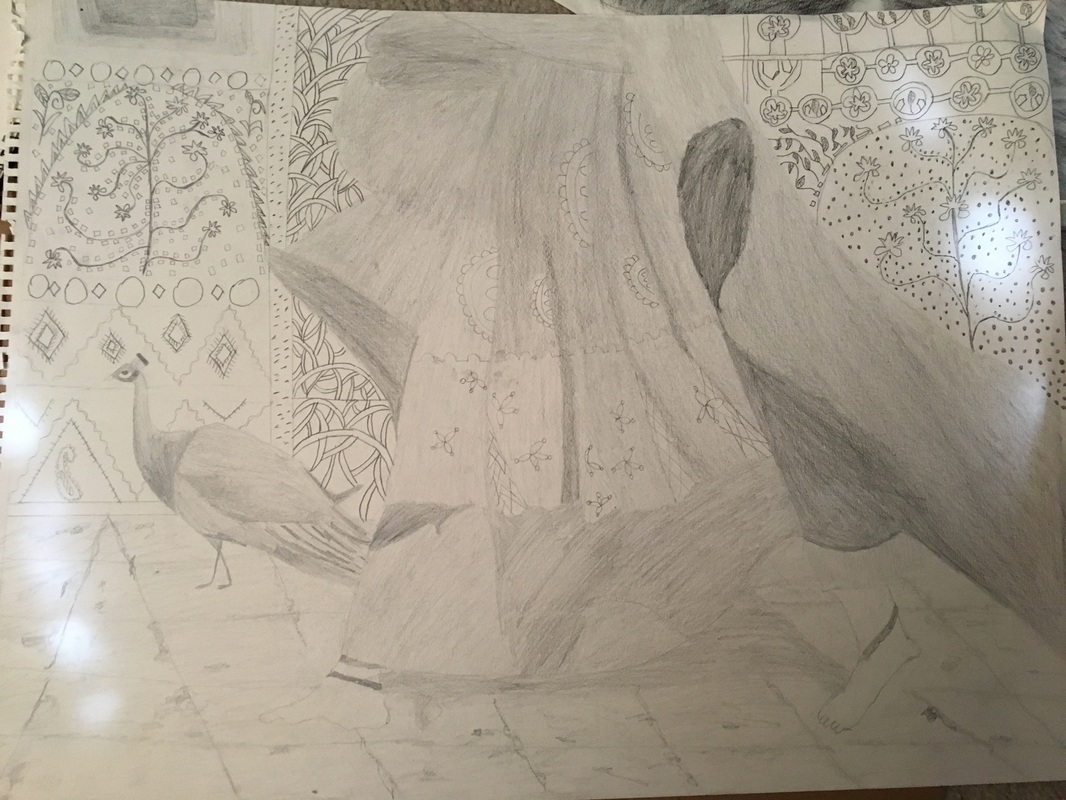
Hand drawn recreation by Aanika of the cover of The Twentieth Wife by Indu Sundaresan.
© 2009-2026 Aanika I. All Rights Reserved.
Introduction: How The Twentieth Wife Changed My Life
Emily Dickinson wrote “There is no Frigate like a Book” in her poem that is also titled the same. For a woman who hardly traveled, Emily Dickinson transcended boundaries of time and place through books. Such was my experience when my world literature teacher gifted me The Twentieth Wife by Indu Sundaresan, a novel about the only female Mughal Empress that ruled in 17th century India’s Mughal Empire, one of the longest ruling dynasties in the Indian subcontinent.
Little did I know that this book would not only inspire a college admissions essay, but also ignite a lifelong passion for discovering remarkable women throughout history.
You know how sometimes one small thing can change the course of your life? Well, for me, it was The Twentieth Wife, which didn’t just introduce me to Empress Nur Jahan; it opened a door to a world of incredible women I never knew existed. This book became my primary reading inspiration, launching me on a journey to discover powerful women’s stories that history textbooks often overlook.
From College Essay to Lifelong Passion
What began as a university admission personal essay over a decade ago has evolved into a journey of discovery that continues to this day. When I first wrote about Empress Nur Jahan and her impact on me, I couldn’t have imagined how profoundly this single literary encounter would shape my intellectual curiosity for years to come. This essay marks not just a moment in my academic journey, but the starting point of a passion that continues to grow with each book I read and each remarkable woman’s story I uncover. My fascination with historical women leaders began with this simple assignment, transforming what was once a college requirement into a lifelong pursuit of knowledge. Though revised and expanded over the years, its heart, the transformative power of discovering women’s stories in history remains unchanged.
Historical Fiction: Discovering Hidden Women in History
Like Emily Dickinson’s poetic journeys, this book transported me to my ancestral past, unveiling a crucial yet often overlooked chapter of history. Though her name is known, her accomplishments and actions are not mentioned in most history books alongside Julius Caesar, Mahatma Gandhi, and Nelson Mandela. I realized these heroes/world leaders we study about were not alone in creating their impact on the world. Female historical figures, though frequently relegated to footnotes, were often instrumental in shaping the course of civilizations and cultures. Long after finishing the book, I couldn’t stop pondering about how many other nameless heroes had sacrificed and contributed to the course of history known today.
My Literary Journey Through Women’s Historical Narratives
This book sparked an insatiable curiosity to uncover more stories of powerful, influential women who had shaped history from behind the scenes. This evolved into a decade long odyssey, exploring the lives of remarkable women across different cultures, eras, and continents.
From historical figures to contemporary changemakers, my reading list grew and grew, encompassing a diverse range of voices and experiences through time and cultures. Discovering diverse women’s stories across different time periods and geographical regions has provided me with a more complete understanding of our shared human history.
Four Books That Inspired My Cultural Exploration
- The Twentieth Wife by Indu Sundaresan (India) – the one that started it all!
- Female Caligula Ranavalona I: The Mad Queen of Madagascar by Keith Laidler
- In the Time of the Butterflies by Julia Alvarez
- Empress Dowager Cixi: The Concubine Who Launched Modern China by Jung Chang
Remarkable Empress Nur Jahan: The Powerful Woman Behind Mughal India
Empress Nur Jahan was the only Mughal Empress in Mughal India. Nur Jahan was a brilliant woman because in a time when women were hidden behind the veil and behind their male counterparts, she persevered by doing things that no other woman could achieve at the time.
- Signed royal edicts in her own name
- Coins issued in her name
- Changed laws
- Presided over court proceedings
- Shared significant political power and wielded political authority during her husband Emperor Jahangir’s reign
Empress Nur Jahan’s Legacy: From Baby Taj to Taj Mahal
Through Indu Sundaresan’s The Twentieth Wife and the sequel Feast of Roses, I have glimpsed this extraordinary woman who was originally named Mehr-un-Nissa by her Persian origin parents. If it weren’t for her, the Taj Mahal, considered by many to be the greatest tribute to love and one of the seven wonders of the world, may have never been built, since she was responsible for the marriage between Emperor Shah Jahan and Mumtaz Mahal (her niece).
Moreover, Nur Jahan was the architect of the mausoleum of her father, known as the “tomb of I’timād-ud-Daulah” or “Baby Taj”. This glimmering white mausoleum she designed and built as a tribute to her father, Mirza Ghias Beg, a treasurer and minister in the court of Emperor Jahangir, was the only structure made out of white marble at the time. It served as the blueprint for the Taj Mahal’s design. Ever since reading The Twentieth Wife, I have considered Nur Jahan to be the original architect for the design of the Taj Mahal.
Personal Connection to Nur Jahan’s Story
When reading about her I feel emboldened with her spirit to change the world and make it a better place. The words courage, strength, and valor come to mind when her name is mentioned, even though she is usually portrayed as a romantic heroine in most contemporary works. In The Feast of Roses, she is shown to be cunning, signing the royal edict with the Portuguese and English and playing them against each other.
South Asian Heritage: Connecting to Historical Women
As a woman of South Asian-American heritage, learning about this magnificent woman enthralls me; she is a woman from the history of the country of my ancestors and, as such, she is a part of my past. Through these narratives, I’ve developed my cultural identity through literature, connecting to my roots while appreciating the complexity and richness of South Asian history.
Expanding My Reading Journey: Discovering Remarkable Women
One book about a Mughal Empress had blossomed into a passion for uncovering the stories of strong, courageous, rebellious, incredibly bad-ass remarkable women from all walks of life throughout history and modern times. I found myself delving into countless biographies, autobiographies, and memoirs of diverse women and men whose stories had been overlooked. Exploring these lesser known narratives has completely transformed my understanding of history and continues to shape my perspective on cultural heritage and women’s roles across civilizations.
🔗More Stories
- 🪞The High School World Religions Class That Changed My Life
- 🐬 How Dolphin Diaries Book Series Shaped My Marine Biology Dreams
- 📚How public libraries became my passport to the world
 Rokeya Hossain Resources Guide
- 📘The Education of Urmi: The Girl Who Transformed My View of Privilege
- 🍚 Ivory Seeds of Nostalgia
- Journey to South India
- Meeting a Dragon in Peru
- Mexico’s Global Soul
- Love Letter to an Indonesian Rockstar

 Journey to South India
 Meeting a Dragon in Peru


Aanika’s Reading List
- Reading List – book recommendations
Aanika’s Reading WishList
- Aanika’s Reading WishList – books I want to read
© 2009-2026 Aanika I. All Rights Reserved.